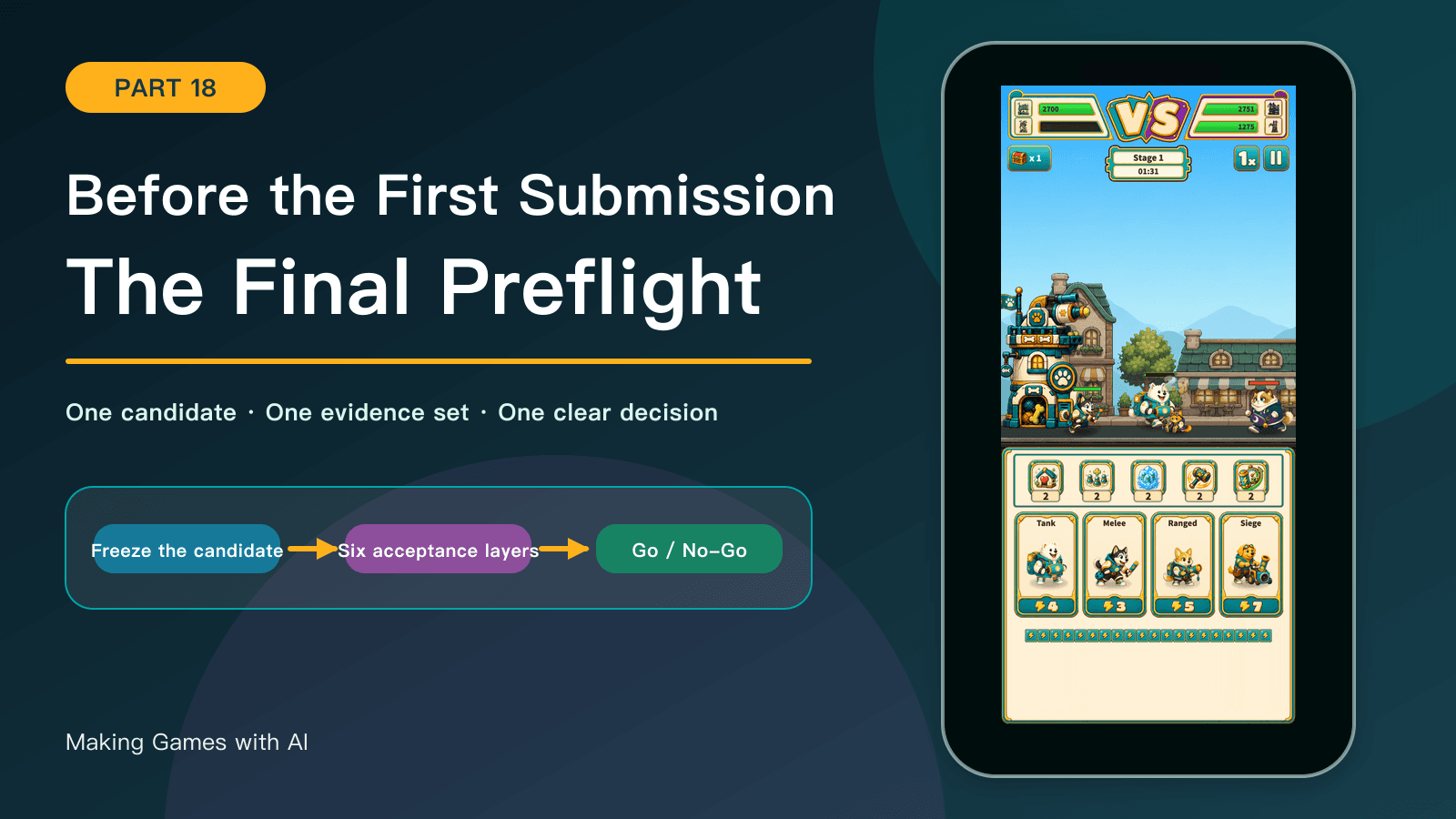
The Final Check Before the First Submission
Freeze one candidate, verify six acceptance layers, trace artifacts and device behavior, and make an evidence-based Go or No-Go submission decision.
Read part 18From the first idea onward: a record of making a game through human judgment and AI-assisted production.
中文Freeze one candidate, verify six acceptance layers, trace artifacts and device behavior, and make an evidence-based Go or No-Go submission decision.
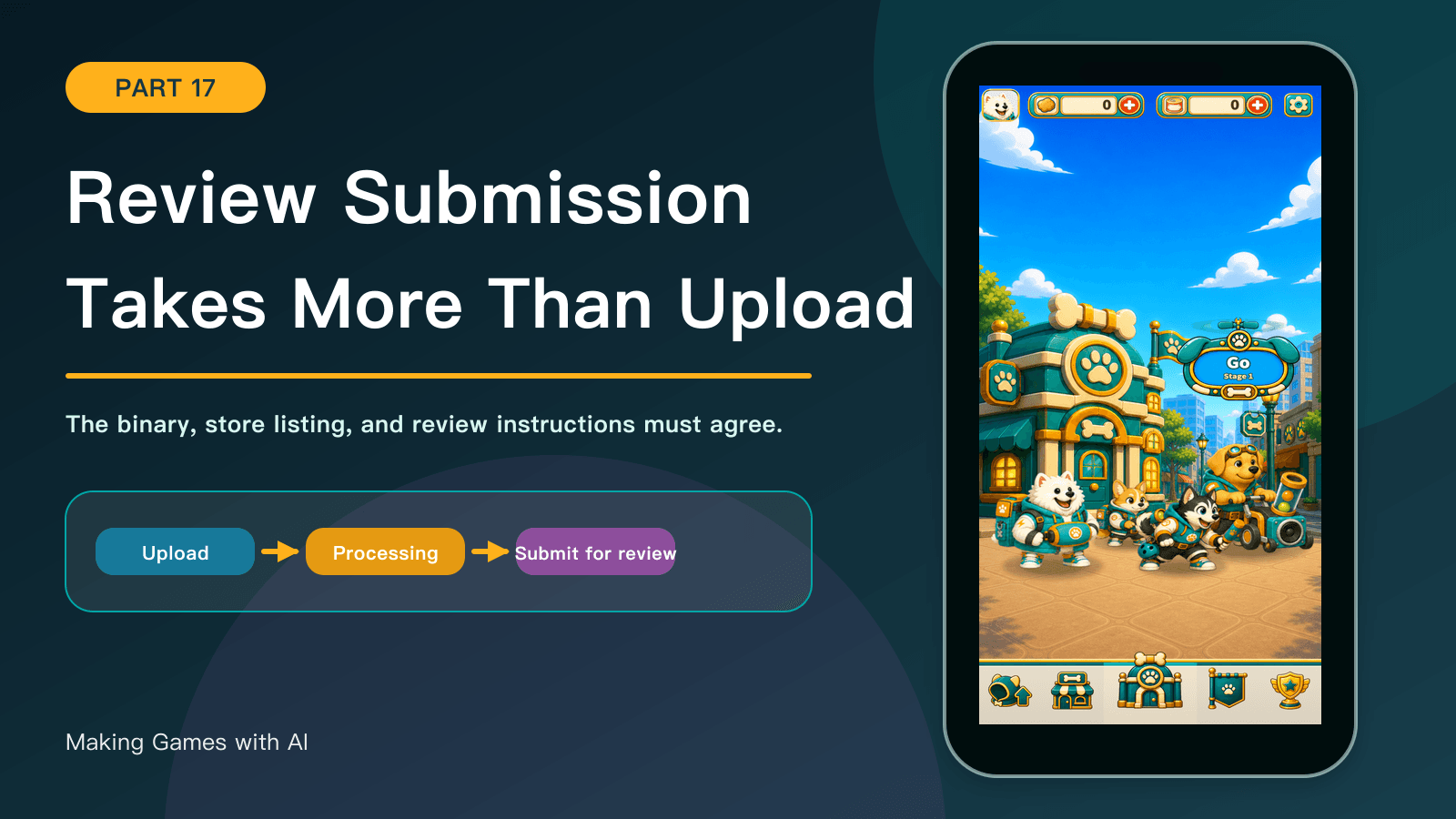
Read part 18A binary is one deliverable. Review readiness also needs aligned store copy, privacy, localization, screenshot slots, remote readback, and device evidence.
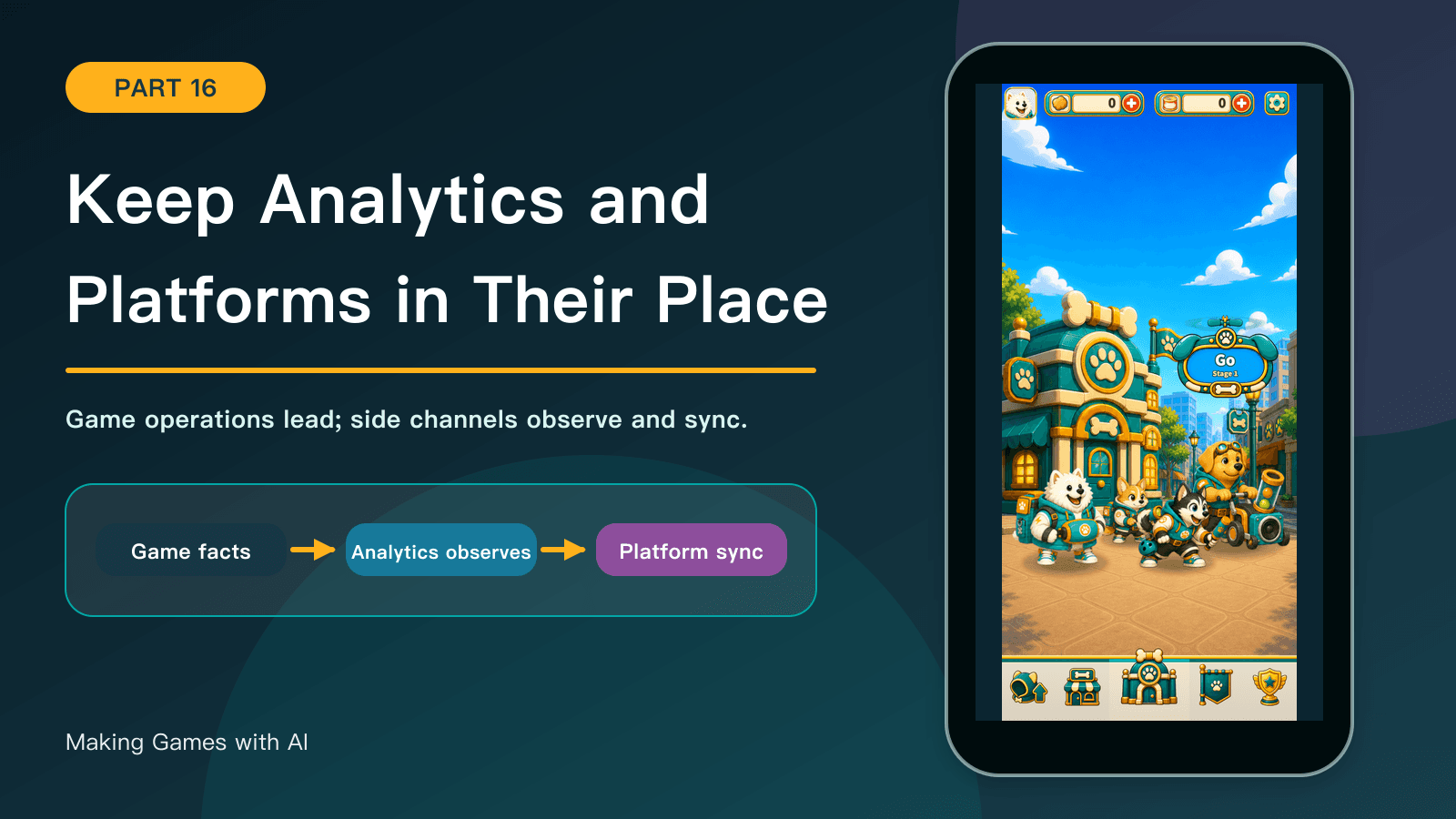
Read part 17Isolate analytics failures, define event facts, label environments, and sync leaderboards after local saves without letting platforms change game outcomes.
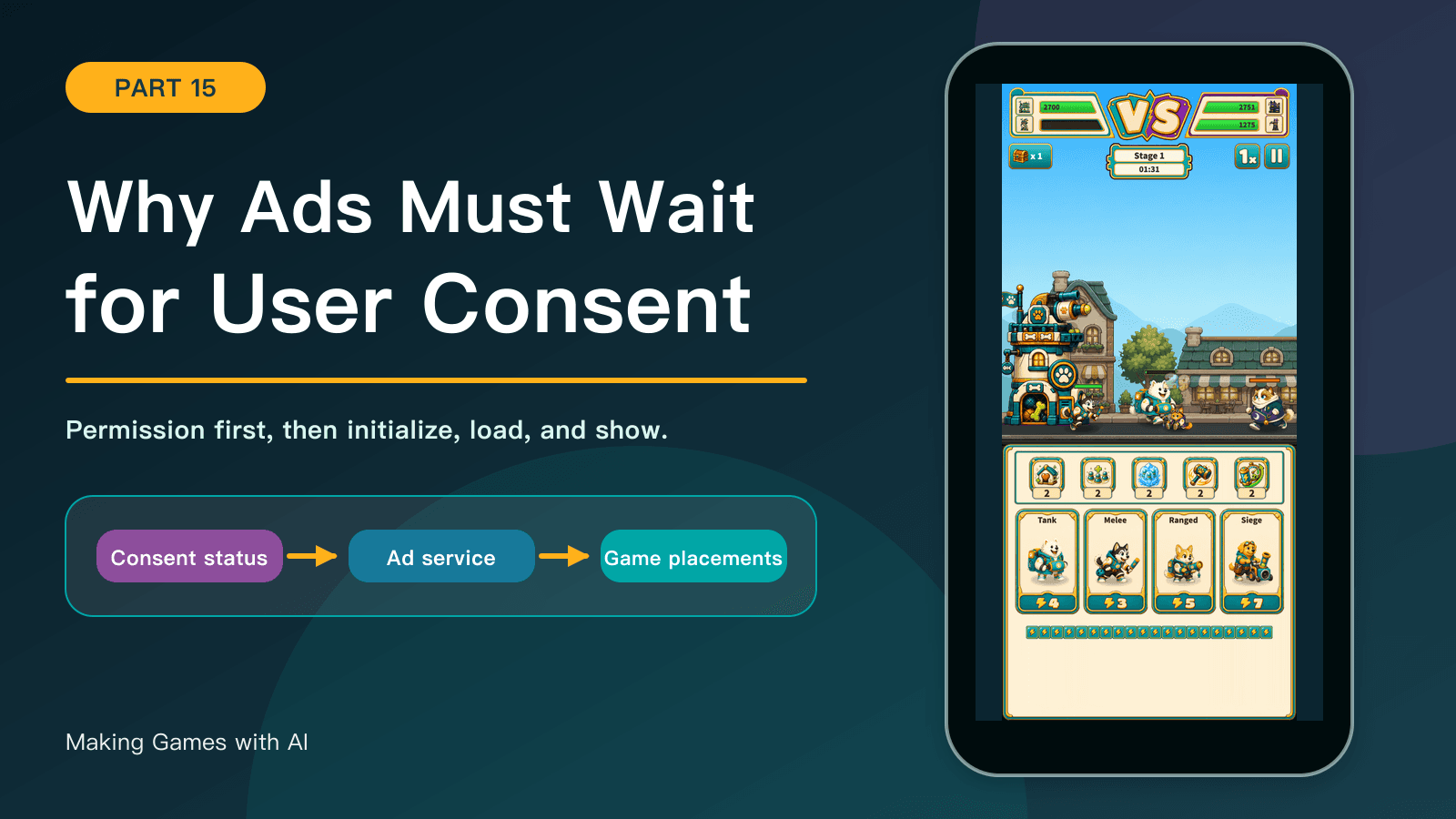
Read part 16Consent before ad initialization: UMP, ATT boundaries, privacy options, rewarded-ad fulfillment, non-blocking interstitials, and historical validation gaps.
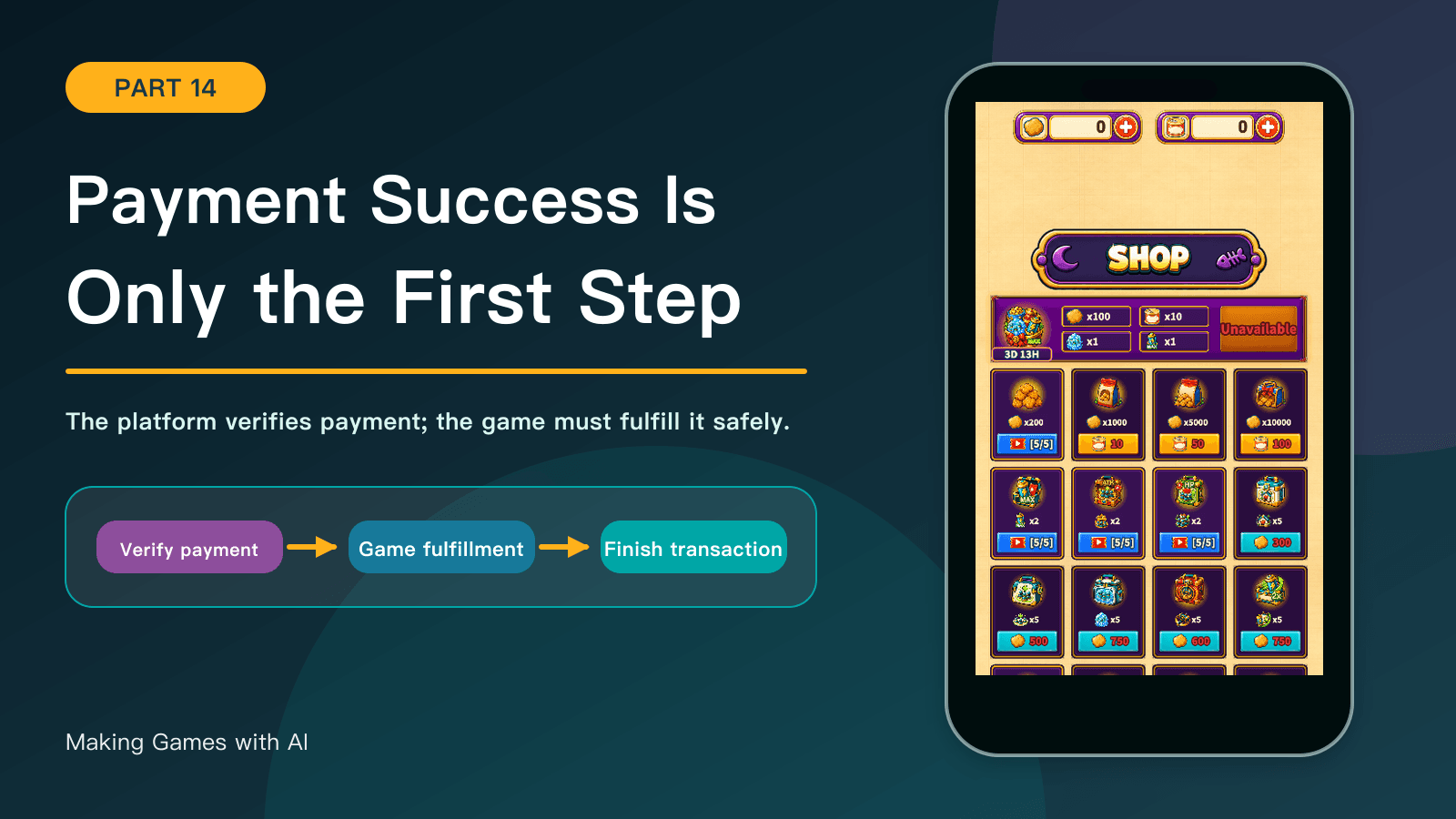
Read part 15Why payment confirmation is only part of fulfillment: transaction IDs, atomic saves, duplicate prevention, rollback, and two distinct recovery paths.
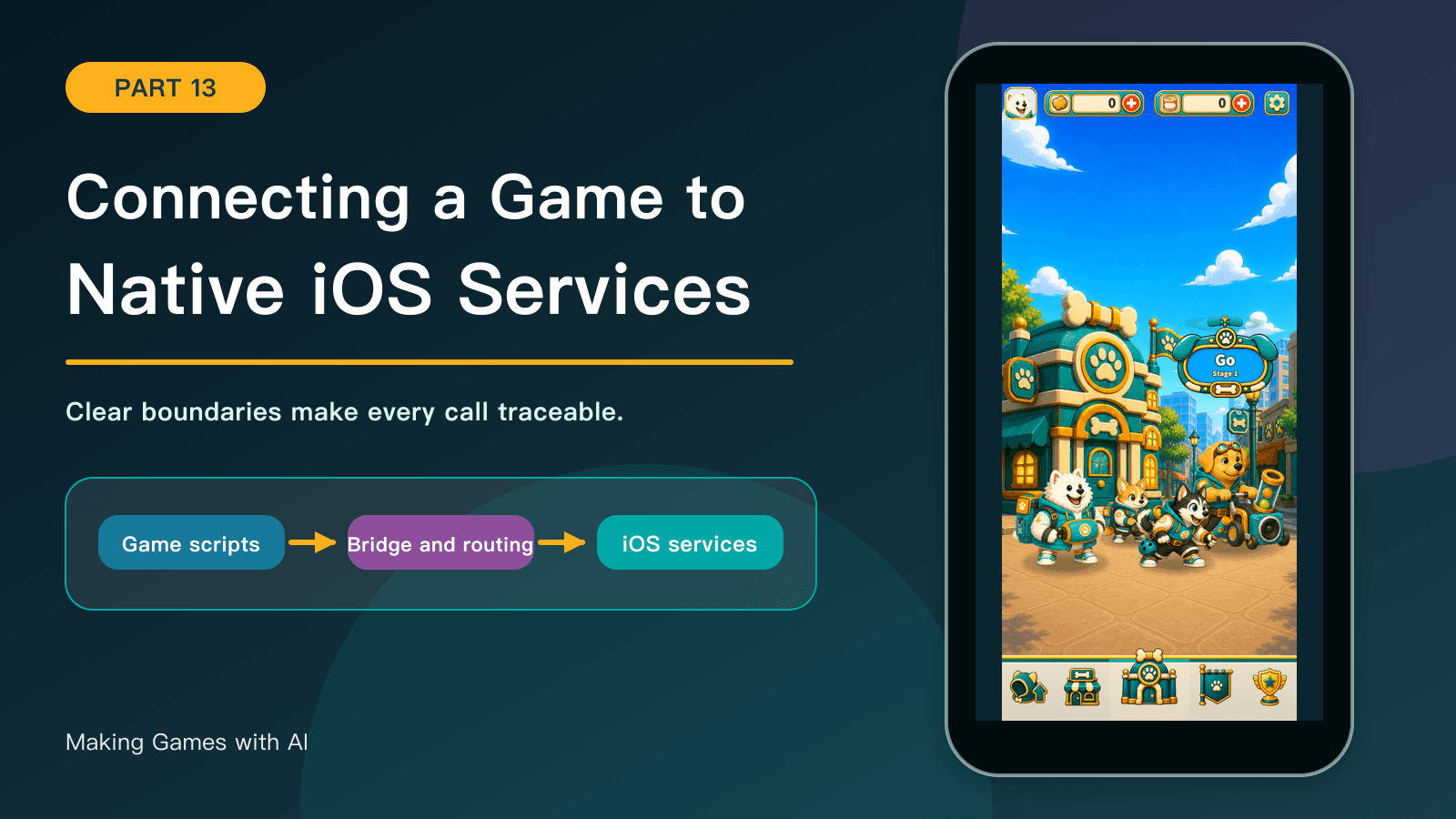
Read part 14Game scripts, Objective-C++, and Swift: one bridge, four channels, traceable async requests, build integration, and distinct layers of verification.
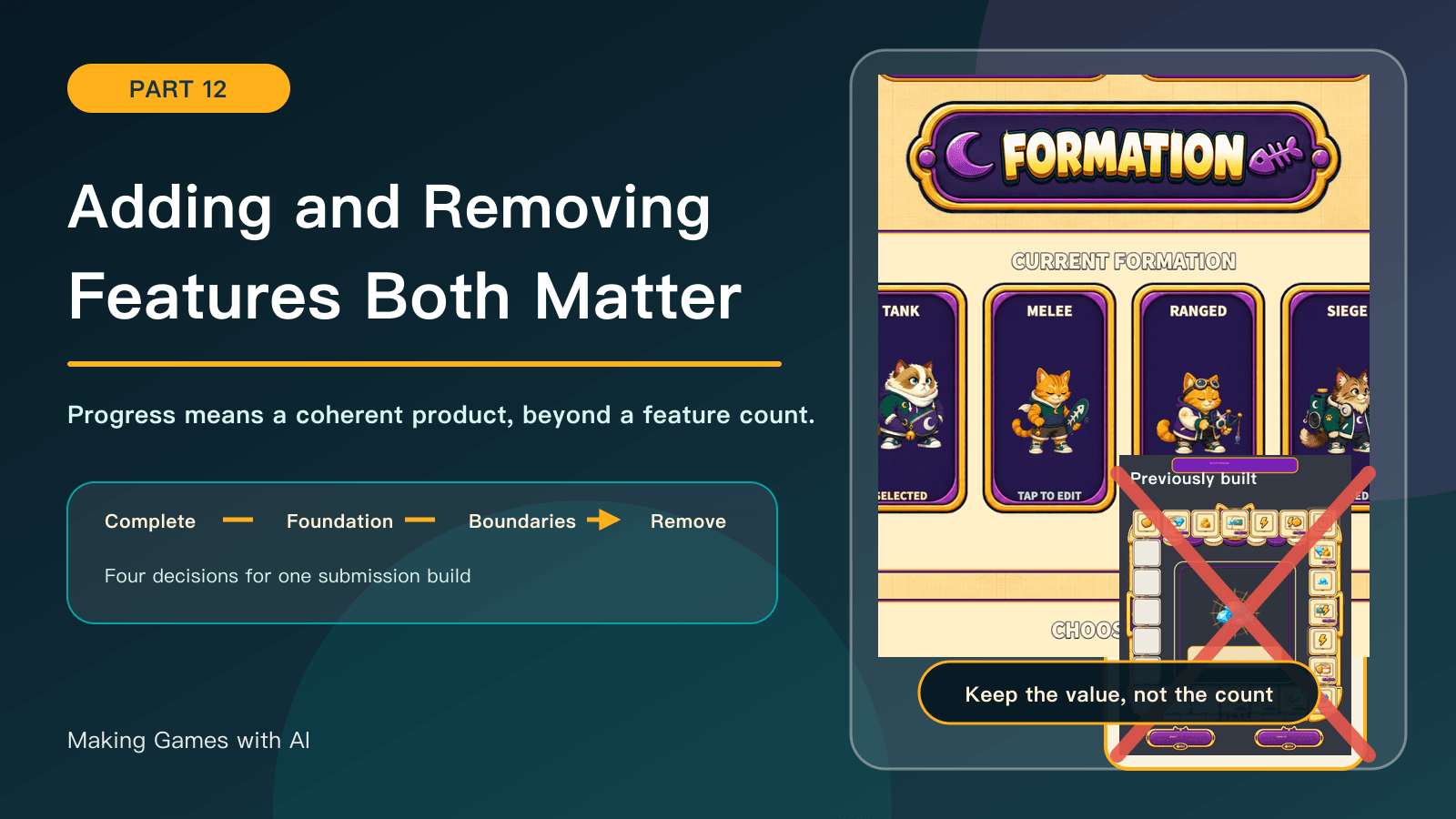
Read part 13Formation foundations, starter items, a stage cap, complete pause behavior, and removing an event branch: making features serve one release goal.
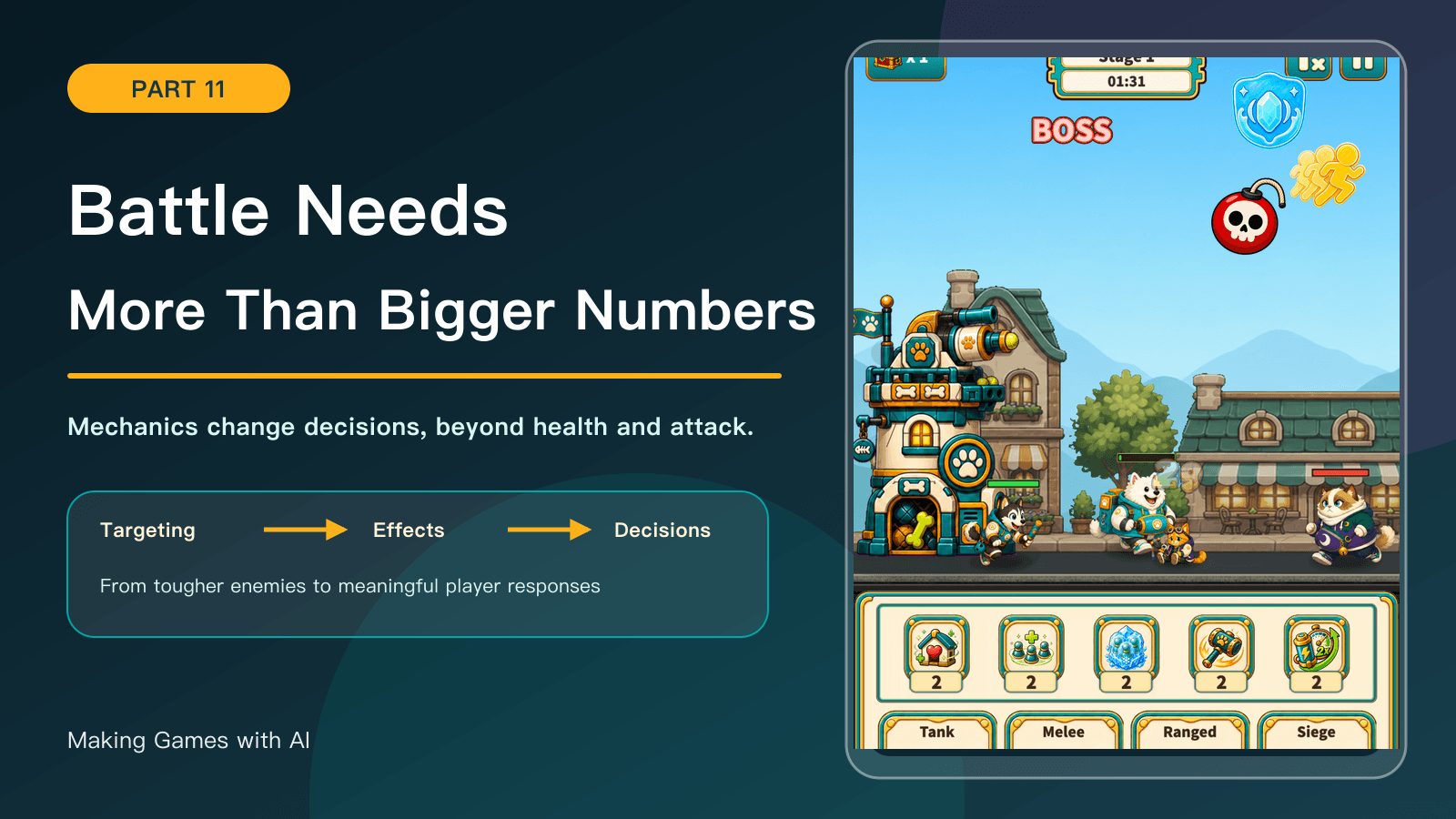
Read part 12Stable targeting, seven effects, explicit Boss combinations, and five items: how mechanics change decisions through readable signals and learning pace.
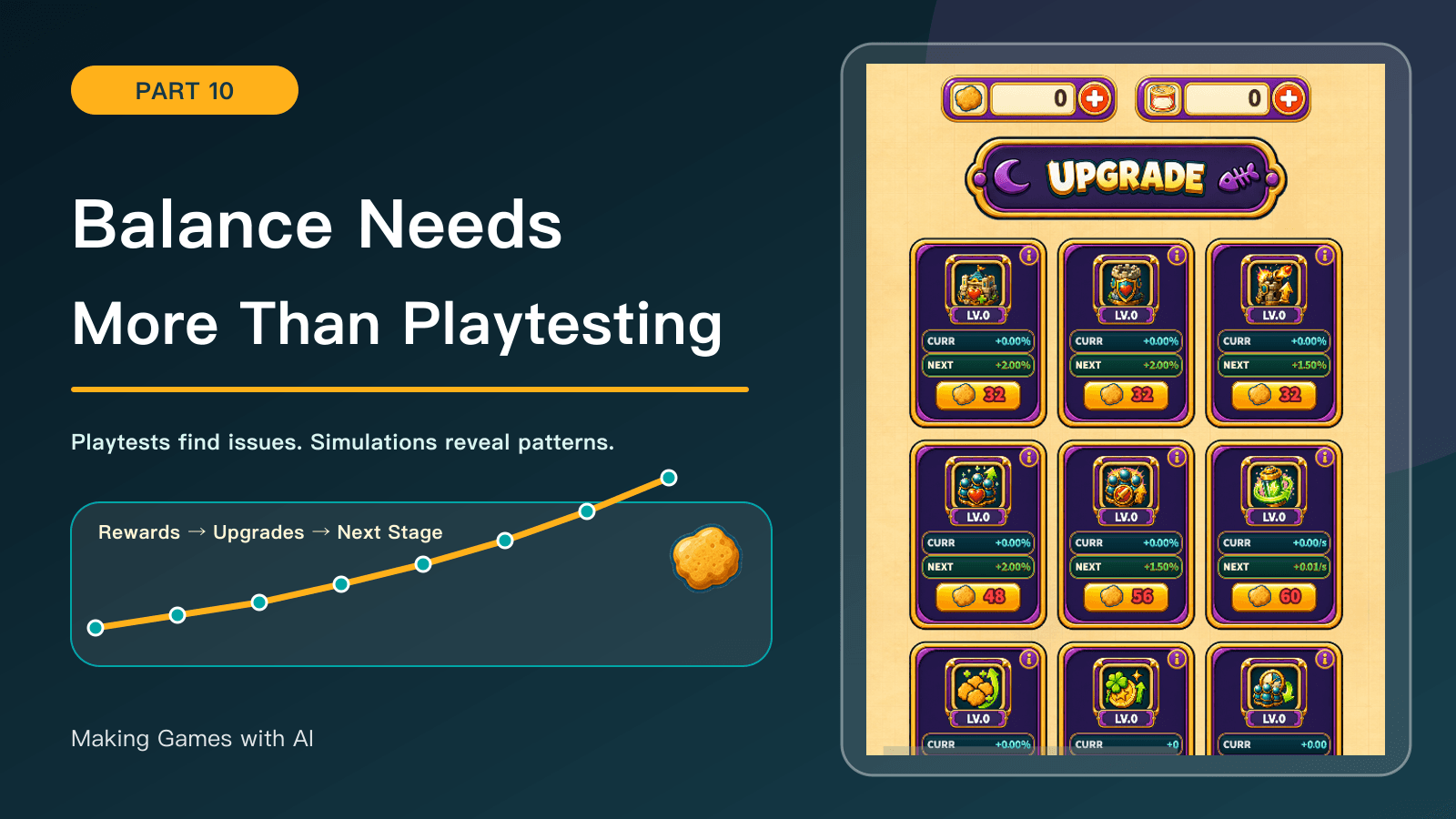
Read part 11Historical simulations reveal the cost of rewards, upgrades, enemy pressure, losses, and waiting—and why one successful playtest cannot prove balance.
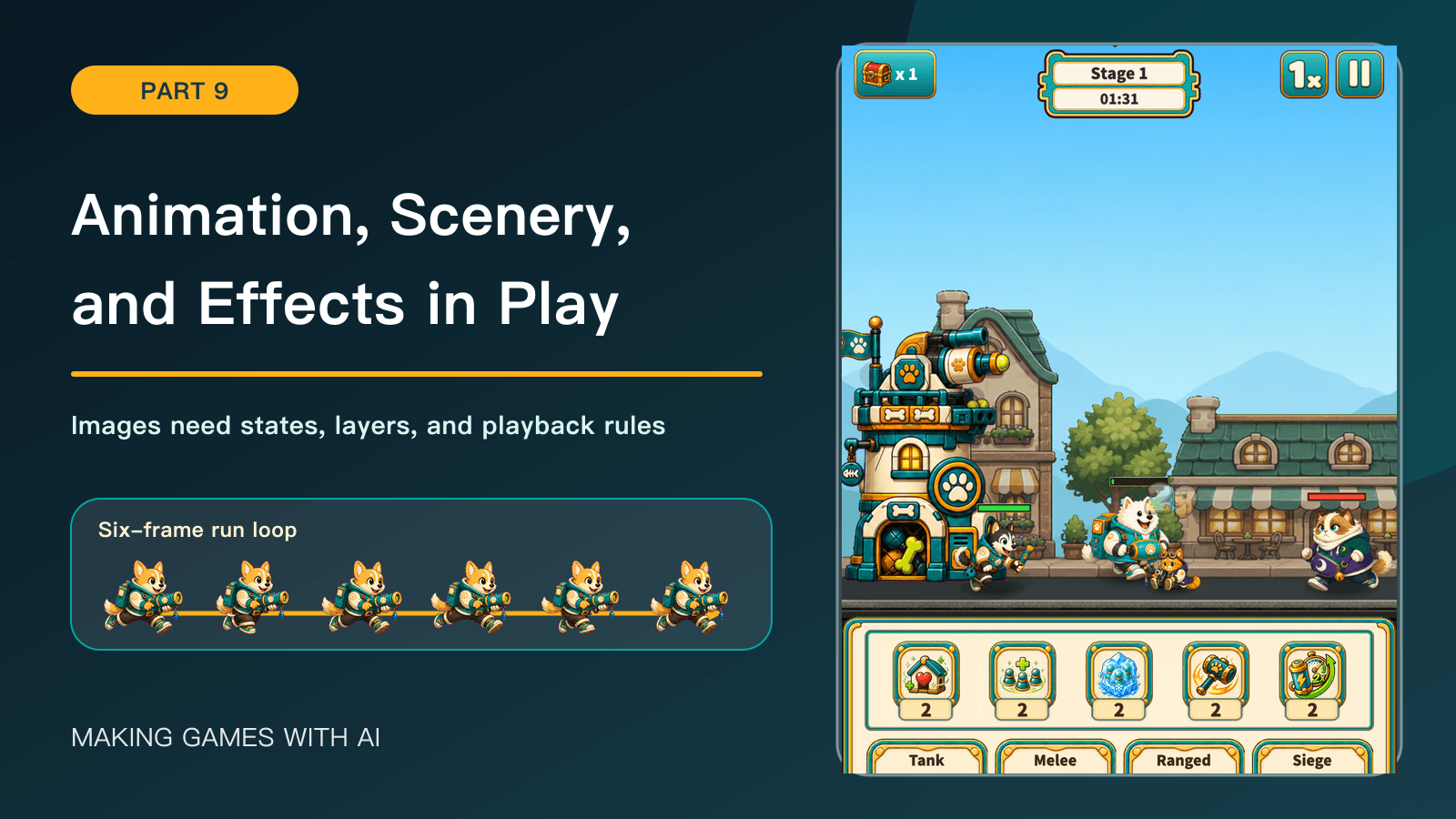
Read part 10How Kibble Street TD connects character states, frame layouts, building animation, layered backgrounds, parallax, and effects to game rules.
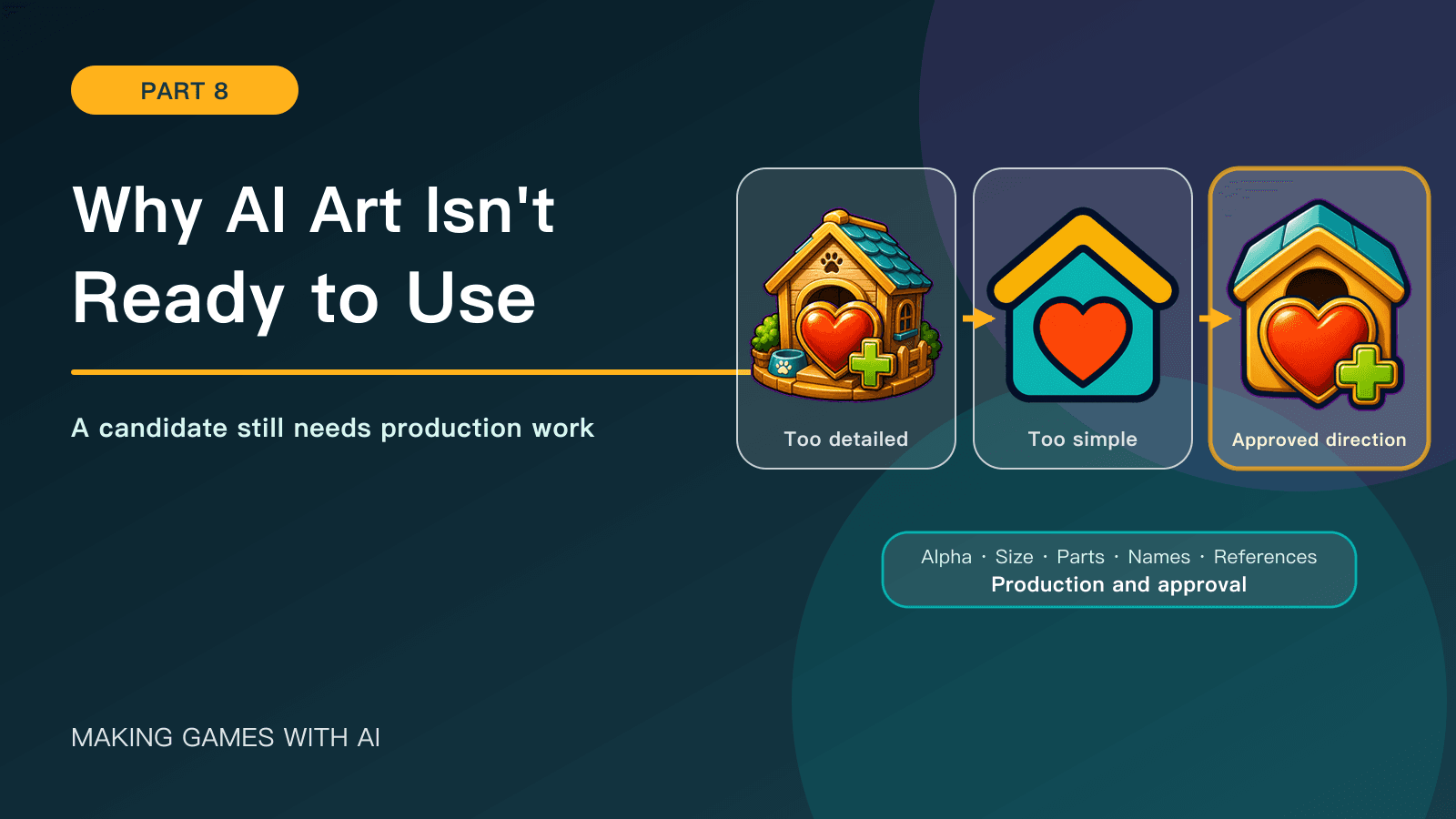
Read part 9From AI art candidates to usable game assets: actual-size checks, runtime references, component boundaries, deterministic processing, and human approval.
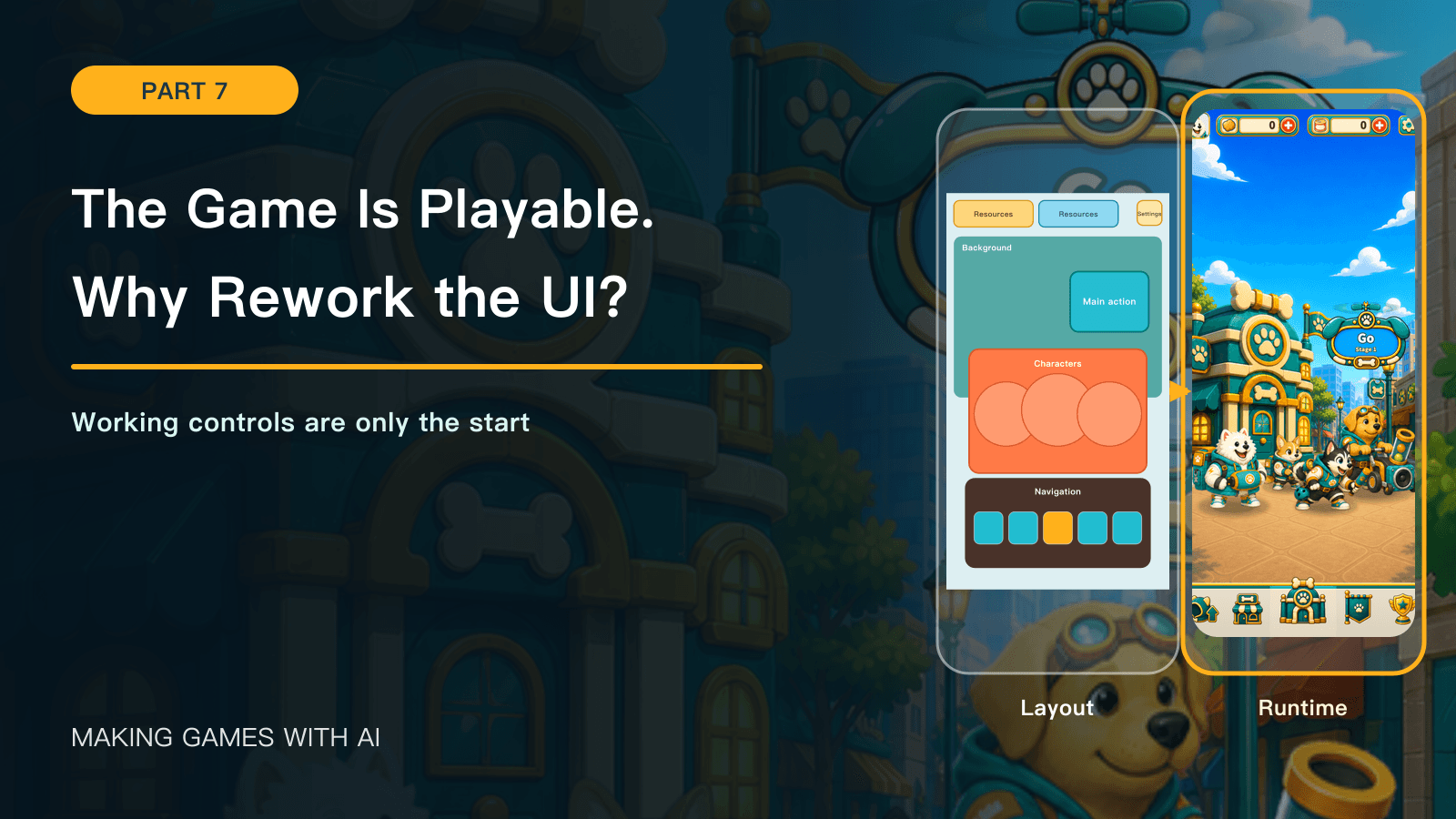
Read part 8Why a playable game still needs UI rework: hierarchy, wireframes, shared components, battle space, and screen-size checks in Kibble Street TD.
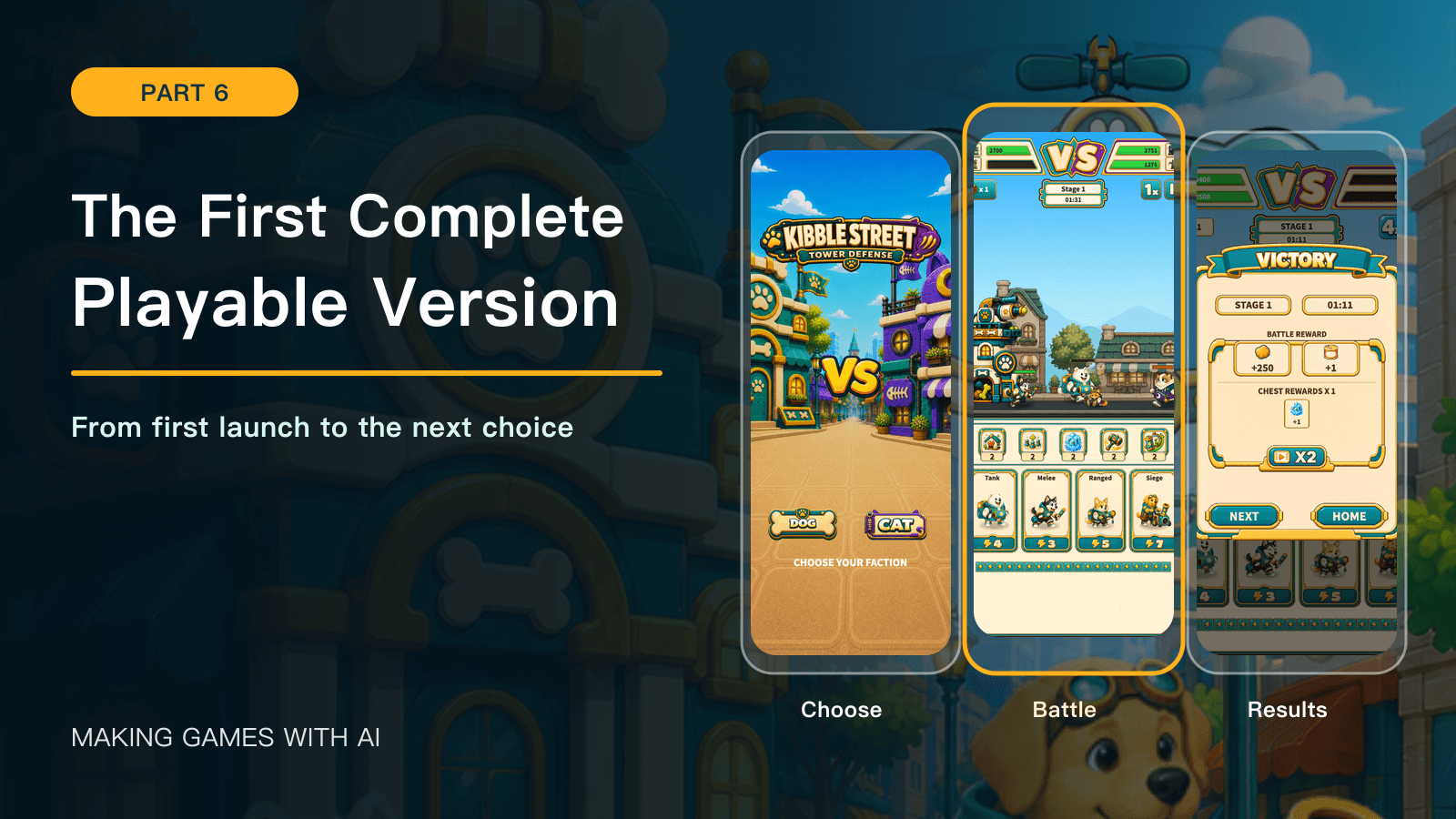
Read part 7Making Games with AI, part 6: how Kibble Street TD connects startup, battles, rewards, upgrades, and saving—and separates playable from ready to release.
Read part 6Making Games with AI, part 5: how startup, Home, preparation, rewards, and saved progress turn one working battle into a complete game loop in Kibble Street TD.
Read part 5Making Games with AI, part 4: how Kibble Street TD uses state snapshots to connect battle rules, summoning, animation, hit feedback, and the HUD.
Read part 4Making Games with AI, part 3: how energy, summoning, movement, attack range, and victory conditions became the first complete battle loop in Kibble Street TD.
Read part 3Making Games with AI, part 2: how one developer divides design, code, art, audio, and testing with AI, with a real revision from Kibble Street TD.
Read part 2Making Games with AI, part 1: how the cat-versus-dog idea behind Kibble Street TD became a testable core loop, a playable prototype, and a foundation for a game.
Read part 1Follow the development process in order.